
tim 
@tim
Admin
Posts
121Following
251Followers
151
tim
tim

Things that frustrate me immensely: There is no hard requirement for equipment like heatpumps and EV wallboxes to be smart in any way. No law that sold vehicles must be able to feed energy back to the grid. We are effectively building out infrastructure we know to be "obsolote" like this. The future will be EVs trading power on the grid, charging when it's plentiful and supporting the grid when it's harder to generate. Heatpumps need to be able to dynamicallly reduce their load on the grid in case of a need of power - and people need to be rewarded for being flexible like this.
Frankly the current state of this technology is a joke. Wallboxes are as smart as a bad calculator (at least *some* have the support for extending them via RS485 or similar, while basic models are basically glorified power outlets), I have seen a new heatpump without any smart external control. It needed a 400€ module to even speak RS485, it couldn't take into account weather forecasts or anything like that. And it's not a cheap system. German name brand, as expensive as a small-ish car.
I am absolutely astonished how badly this is regulated. It's as easy as making it a law - you want to sell a wallbox? It has to have the ability to receive updates and to take control via LAN (fuck this cloud IoT rubbish, it needs to work locally with a local energy management controller). You want to sell a vehicle? It has to be vehicle-to-grid ready according to whatever standard we enforce. You sell a heatpump? Same as the wallbox - it needs to have LAN connectivity for local energy management. Also IMHO this must include user-driven updates, without a manufacturers cloud and some form of escrow - if the company making those products goes bankrupt, the documentation of how those products work internally must be publicized so they can be maintained and updated. We also need well-enforced standards for integration to local energy management hubs.
Frankly the current state of this technology is a joke. Wallboxes are as smart as a bad calculator (at least *some* have the support for extending them via RS485 or similar, while basic models are basically glorified power outlets), I have seen a new heatpump without any smart external control. It needed a 400€ module to even speak RS485, it couldn't take into account weather forecasts or anything like that. And it's not a cheap system. German name brand, as expensive as a small-ish car.
I am absolutely astonished how badly this is regulated. It's as easy as making it a law - you want to sell a wallbox? It has to have the ability to receive updates and to take control via LAN (fuck this cloud IoT rubbish, it needs to work locally with a local energy management controller). You want to sell a vehicle? It has to be vehicle-to-grid ready according to whatever standard we enforce. You sell a heatpump? Same as the wallbox - it needs to have LAN connectivity for local energy management. Also IMHO this must include user-driven updates, without a manufacturers cloud and some form of escrow - if the company making those products goes bankrupt, the documentation of how those products work internally must be publicized so they can be maintained and updated. We also need well-enforced standards for integration to local energy management hubs.
 1
1
 1
1
 3
3
tim
tim
While I was pretty happy with my headscale/tailscale setup, I missed one part: Vanity hostnames for services. In my tailnet, only machines get nice hostnames, but for example I want access to a host like http://grafana/ for my central Grafana (a service on a random port on one box). It took a total of 49 lines of go code to build a reverse-proxy that does this. This proxy is it's own node on the tailnet, therefore it gets a hostname and takes part in the usual routing. It then uses the reverse proxy lib built into golang to proxy to the real host.
1
0
1
tim
tim
==> Escalating privileges using sudo
==> finished: 145 packages removed (disk space saved: 853 MiB)
Arch Linux update rates are a bit staggering, I updated this computer like... last week.
==> finished: 145 packages removed (disk space saved: 853 MiB)
Arch Linux update rates are a bit staggering, I updated this computer like... last week.
0
0
0
tim
tim
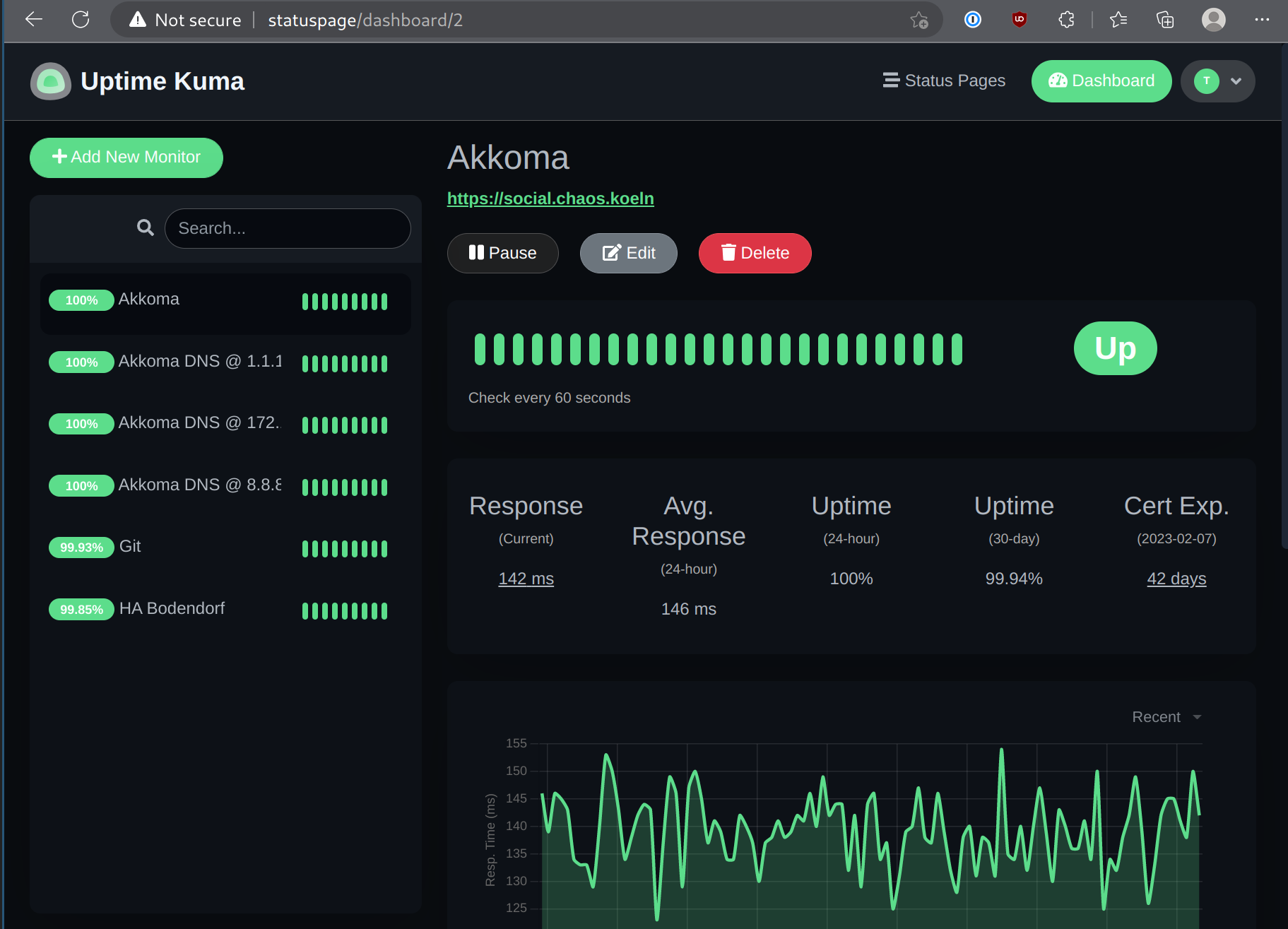
This whole open source & self-hosted stuff is kind of amazing. My tiny (2 Core, 4GB) server runs my social media (Akkoma), headscale controller for VPN, gogs for git, syncthing for file-sync. At home and at my parents place I have a Rasberry Pi for Home Assistant that is hooked into my headscale network, too.
2
2
5
tim
tim
Okay so this is now cozy and all, still don't know what to post though :D
I guess might as well share some of the fun I had last week:
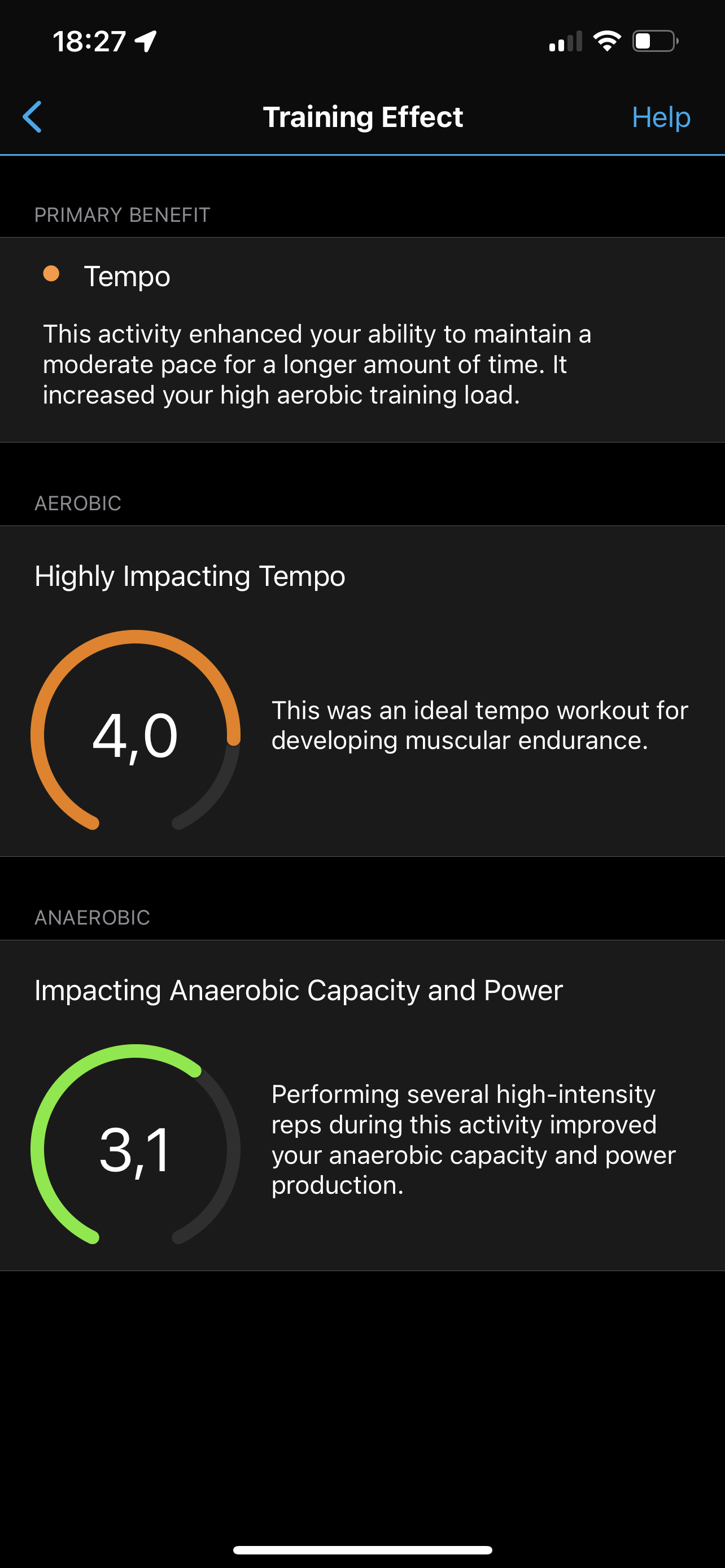
- Garmin Fenix 7: Much nicer than the Apple Watch. For me. Ca 2w of battery life, amazing output regarding training ("after this workout and the bad sleep you had, don't train for the next 3d")
- Flatcar container Linux: Seems to be amazing and the future for the platform we build at work. Super tired of running mutable OSs
- Lupine lighting systems new front bike light for the roadbike: 10/10. You pay for it, but this is better than what I imagine.
- Roadbiking: Should have never made the break i made, feels so good.
I guess might as well share some of the fun I had last week:
- Garmin Fenix 7: Much nicer than the Apple Watch. For me. Ca 2w of battery life, amazing output regarding training ("after this workout and the bad sleep you had, don't train for the next 3d")
- Flatcar container Linux: Seems to be amazing and the future for the platform we build at work. Super tired of running mutable OSs
- Lupine lighting systems new front bike light for the roadbike: 10/10. You pay for it, but this is better than what I imagine.
- Roadbiking: Should have never made the break i made, feels so good.
0
0
1

tim
tim
Things I like less in life: Servers locking up for hard to explain reasons. Somewhere between a weird Ceph object storage daemon, a coredump handler that freezes and general k8s madness lies the explanation why some nodes end up with a constant iowait, no responses to ps/htop and general madness unless rebooted. I can’t begin to explain how annoyed I am with this looming threat of this happening to a cluster that’s not only hosting internal tooling but real production services.
0
0
2
tim
tim
Back after 2 days of business trip in Amsterdam. I managed to see basically nothing of the city - arrived Sunday night after a delayed train,went right after the training. Not my favorite thing to do.
0
0
0
tim
tim
There's nothing like remote-debugging your parents smart home. Something broke the powerline link to the garage, now their Home Asisstant instance can't set wallbox charging limits anymore m) Time to build an ESP32 based system with local control that at least has a "just charge it" button. Also: Stupid freaking wallbox that needs constant modbus communications to work. How hard wold a "just do what I told you last time" flag be. I know, for coordinating multiple wallboxes and keeping power limits it's safer to not charge if comms are down, but I'm only doing PV optimization here, not load limiting for any critical stuff.
0
0
0


tim
tim
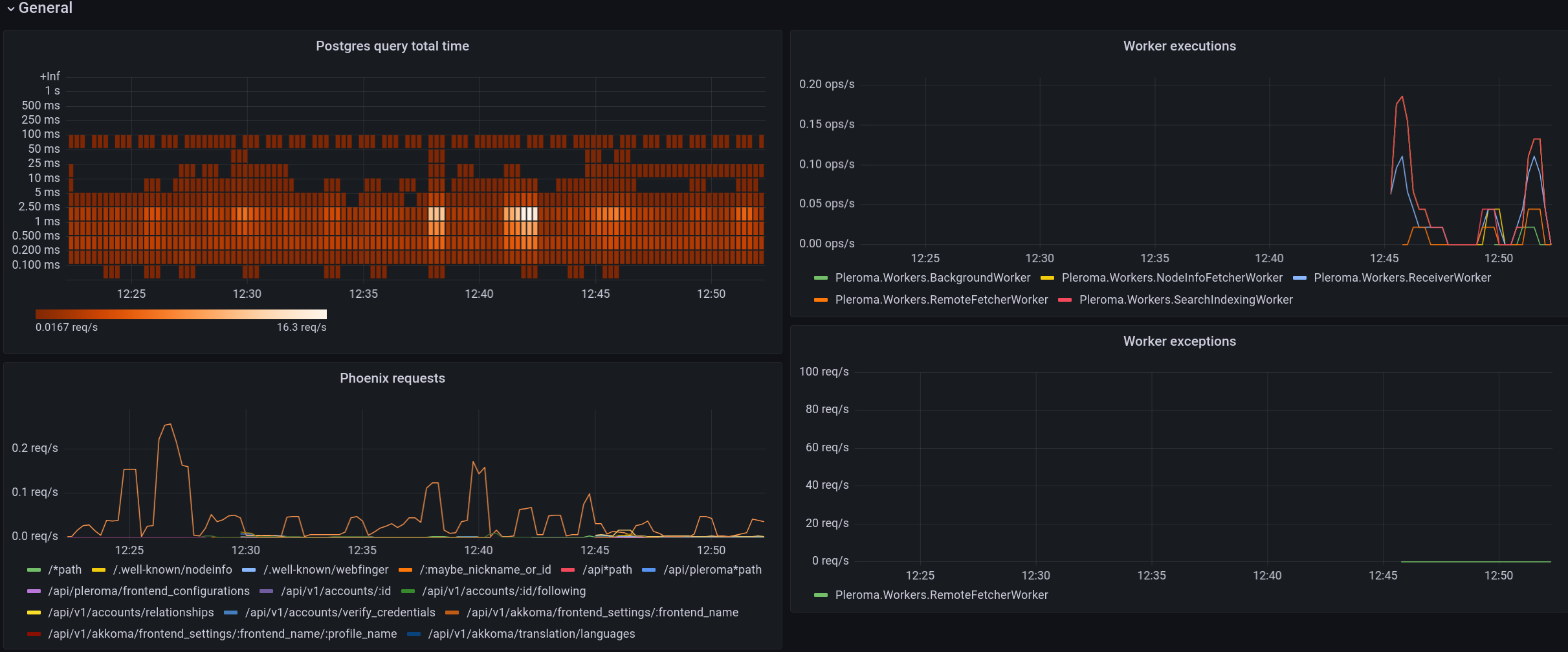
Got myself some graphs going to see how my tiny instance is doing. Elixir is still very close to my heart for being able to do this so neatly.
Now I just need to dig a bit into the details of the inner workings of the database to add counts like number of federated instances, users, statuses in my DB.
Now I just need to dig a bit into the details of the inner workings of the database to add counts like number of federated instances, users, statuses in my DB.
0
0
2
tim
tim
meta-fu
Show content
Okay... So I migrated yet again :D Now all in on akkoma, this seems like a well-enough maintained fork by nice folks. I still need to figure out what in it makes it suck this much CPU, but that is manageable.
2
0
1
tim
tim
metabla
Show content
Pew. Frustration is very real that there isn't a nice frontend for Plemora that does all I want. Either I can't login because MFA isn't implemented, it looks horrible, it so severely outdated it doesn't even make sense to try or it's made by people so horrible that it might get you banned from federating with some instances. So... just horrible options, I guess?
0
0
0
tim
tim
Meta-bla, TERFs
Show content
Das wohlige Gefühl wenn der Maintainer von der Server-Software auf die du migriert bist einfach komplett lost ist.
1
0
2

tim
tim
meta
Show content
Oh well, Knopf gedrückt. Ziemlich magisch wie stark diese Federation klappt. Ihr folgt mir jetzt auf meiner eigenen Instanz statt auf chaos.social.
1
0
2